

Bone Scan
(Sodium Fluoride-Naf-18)
Bone scans are used by the imaging experts at Optima Diagnostic Imaging to determine the health of skeletal structures. We use the new generation, state-of-the-art PET/CT technology with Sodium Fluoride to obtain fused PET and CT images of the bones.
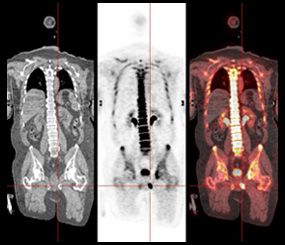
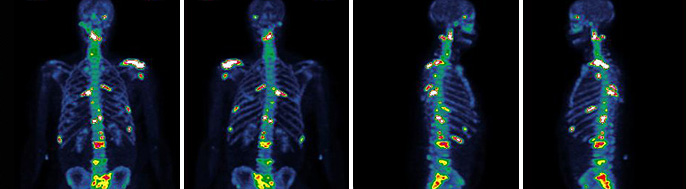
NaF-18 bone scan is a new technology that has been found to be highly sensitive and accurate in detecting abnormalities and is available at our private Los Angeles facility. Using PET technology and the 18F Sodium Fluoride radioisotope, we can now image the skeletal system (bones) in a much more sensitive and efficient manner than with traditional SPECT (single photon emitting computed tomography). Therefore, we can detect metastatic bone disease at much earlier stages and can help differentiate benign from malignant bone lesions.
Sodium Fluoride bone scans are a valuable tool in critical treatment decisions and are commonly used to stage many types of cancers and to evaluate responses to medications, chemotherapy, and radiation therapy. By identifying and attacking the spread of cancer to bones much earlier, we increase the chances of eliminating the disease.
Bone Density Scan
Another type of bone scan offered at Optima Diagnostic Imaging is the bone density scan. A bone density scan, also called a DEXA scan, is a quick and painless test that measures how strong your bones are. It helps doctors check for signs of bone loss or conditions like osteoporosis. The bone density scan uses a very low dose of X-ray to look at areas like your lower spine and hips—places where bone weakness often occurs.
If you're looking for a trusted provider for a bone density scan in Los Angeles, Optima Diagnostic Imaging offers advanced technology and a private, comfortable setting. Our experienced team delivers fast, accurate results to help you and your doctor stay ahead of bone health. The exam takes just 10 to 20 minutes and requires no special preparation.
Bone Scans: Safe & Painless
Bone scans are a short painless procedure. Patients are positioned on a table while the images are taken. All bone scans offered are completely safe. It uses a very low dose of X-ray radiation—much less than a standard chest X-ray—and is considered non-invasive and painless. At Optima Diagnostic Imaging, your safety is our top priority. Our state-of-the-art equipment and expertly trained staff ensure each scan is performed with the highest safety standards in mind.
Conditions a Bone Scan Can Detect
At Optima Diagnostic Imaging, our advanced skeletal imaging technology offers unparalleled sensitivity in evaluating your bone health. By tracking cellular and metabolic changes in the skeletal system, a bone scan can effectively identify and evaluate a wide variety of orthopedic, oncological, and traumatic bone conditions, including:
- Metastatic Bone Disease: Identifying if primary cancers (such as breast, prostate, or lung cancer) have spread to the skeletal system, enabling diagnosis at much earlier stages than traditional imaging.
- Primary Bone Cancers: Detecting tumors that originate directly within the bone tissue, such as osteosarcoma.
- Benign vs. Malignant Lesions: Helping radiologists differentiate between harmless bone growths and dangerous, cancerous lesions.
- Hidden or Complex Fractures: Locating hairline, stress, or deep skeletal fractures (including hip, spinal, foot, or hand fractures) that may remain completely invisible on standard X-rays.
- Bone Infections (Osteomyelitis): Diagnosing localized infections or inflammation within the bone structure or surrounding joints.
- Avascular Necrosis: Detecting a lack of blood supply to the bone tissue, which can cause the bone structure to break down and collapse.
- Paget's Disease of Bone: Evaluating chronic conditions that cause bones to grow abnormally large, weak, or misshapen.
- Unexplained Bone Pain: Investigating persistent, localized skeletal or joint pain when other diagnostic tests fail to provide a clear answer.
- Response to Therapies: Tracking how effectively a patient's skeletal system is responding to cancer medications, chemotherapy, or radiation treatments.
How to Prepare for Your Bone Scan
Preparing for a bone density scan is simple. You can eat and drink normally on the day of your exam, but we recommend wearing comfortable clothing without zippers, buttons, or metal. Avoid taking calcium supplements for at least 24 hours before your appointment. If you’ve recently had any contrast imaging (like a barium exam or CT scan with contrast), please let us know beforehand.
Read Patient Preparation Information
What Happens During the Scan?
During the bone scan, you'll lie comfortably on a padded table while a scanning arm passes over your lower spine and hips. The exam is quick—usually taking about 10 to 20 minutes—and completely painless. You’ll need to remain still, but you can breathe normally. If you're coming in for a bone density scan in Beverly Hills, our expert technologists at Optima will guide you through each step, ensuring a smooth and reassuring experience from start to finish.
 Bone Scanning at Optima Diagnostic Imaging has been awarded accreditation after a comprehensive review performed by the American College of Radiology (ACR). This certification confirms that our center meets rigorous standards for practice in Bone Scans.
Why Choose Us for Your Bone Scan?
At Optima Diagnostic Imaging, we are dedicated to delivering exceptional care through advanced technology and personalized service. Our facility is equipped with state-of-the-art imaging systems, allowing us to provide fast, accurate results in a comfortable, private setting. From the moment you walk through our doors, our experienced team is focused on making your visit as smooth and stress-free as possible.
When it comes to finding a trusted provider for a bone scan in Los Angeles, Optima stands out for its precision, expertise, and commitment to early detection. Our highly trained radiologists specialize in bone health assessments, helping patients and referring physicians make informed decisions with confidence. Whether you're undergoing routine screening or managing a specific condition, we ensure the highest standard of diagnostic care.